Call This Saturday to Get $50 OFF

blogdetailimage

Let’s face it: Clogs can be very annoying and unsettling, especially when they are anywhere near our bathrooms. Not only do they waste time and look horrible, but they can also result in costly repairs for homeowners if the proper precautions aren’t taken. Unfortunately, many homeowners aren’t aware of common causes of clogs and ways to unclog sinks and prevent this problem from reoccurring in the future. So, we have prepared this guide to answer all of your questions. If you want to learn more, call Mr. Rooter Plumbing today.

Common Causes of a Clogged Bathroom Sink

  • Hair Buildup: Hair buildup is one of the most common reasons for clogs in bathroom sinks. When hair falls into the sink, it gets wet and can even clump together. This can cause blockages by themselves and form a setting where anything solid can attach to the hair and worsen the blockage.
  • Soap Scum: Soap scums are one of the main solids that can attach to the hair buildup in the sinks. The constant use of soap to clean out hands will combine with ions and form a sticky substance that attaches to other substances.
  • Age of the Plumbing System: A plumbing system can last between forty and seventy years. If the age of your plumbing system exceeds this number or there is a specific problem with the sink, it may come across as clogs in the bathroom sink.
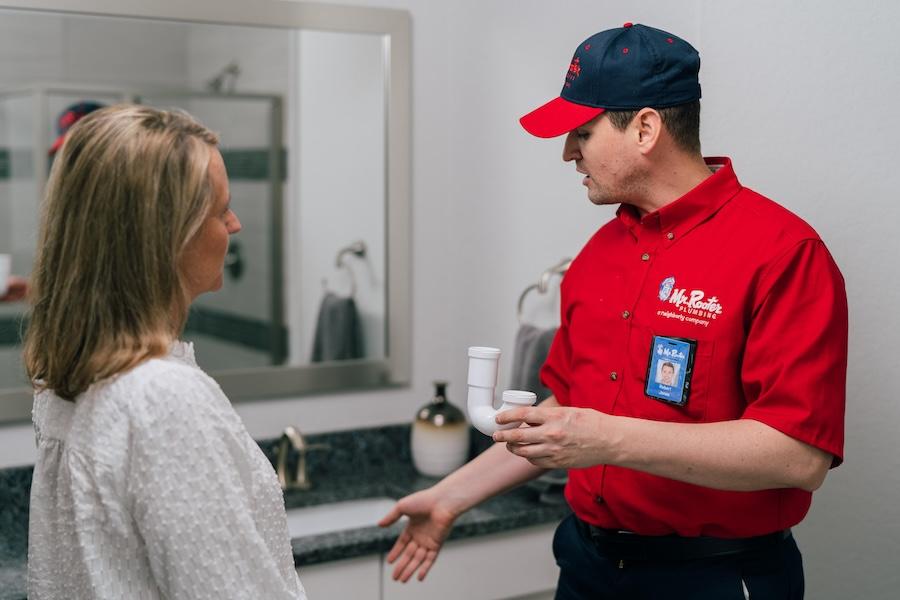
  • P-Trap Blockage: A P-trap is a U-shaped pipe that bends directly beneath the sink. This part is very important as it is a common place for clogs and blockages of the drains.

Ways to Unclog The Bathroom Sink

  • Clean the Drain: If you want to unclog the bathroom sink, the first step is to clean the drain. If you see any visible hair or other debris, pick it up and throw it away. From now on, avoid using the sink to get rid of solid substances.
  • Use A Plunger: Use a plunger and hot water for a minute or two. There is a misconception that a plunger is only effective for the toilet but also maintains the same effectiveness for sinks. If this doesn’t work, we may have to move on to the trap cleaning.
  • Clean Out the Trap: We mentioned the P-trap in the previous section. If you are facing a clog, it may be caused by the P-trap. Try taking the trap and cleaning it while ensuring a safe reattachment. In this process, you may need help from a professional plumbing service.

Prevent Future Bathroom Sink Clogs

  • Use A Drain Cover: Hair is a big component of bathroom sink clogs. Using a drain cover will catch on to hair, soap scum, and other solids that contribute to the blockage.
  • Use Hot Water & Vinegar: Homeowners must be aware of using hot water and vinegar. This great combination should be used at least once every few months to ensure the system is supported.
  • Maintenance: You may need to maintain your sinks to ensure their effectiveness. A drain cleaning service removes clogs while avoiding the consequences of harsh chemicals that damage your plumbing system. Call a plumber today to learn more about this service.

Mr. Rooter Plumbing

Are you looking for a plumbing contractor you can trust for plumbing services? You are in the right place. At Mr. Rooter Plumbing, we strive to provide you with choices to resolve your plumbing issue. With our experienced plumbers, affordable price plans, and exceptional customer service, you no longer have to worry about how to unclog drains. Call us today to learn more about us and our services.

Our Latest News & Blog

08/Dec/2025 blog1

What Not to Flush: Protecting Your Septic System from Damage

We all know that septic tanks are meant to handle waste to a certain degree. However, do we…

Read More
08/Dec/2025 blog1

Sump Pump Installation for Storm-Prone Areas: What You Need to Know

For homeowners who live in areas that receive heavy rainfall throughout the year, sump pumps aren’t just a…

Read More
blog1
01
Dec

The #1 Mistake Homeowners Make with Septic Maintenance

When it comes to septic health, you can be one of those homeowners that try to do everything…

Read More
blog1
01
Dec

Pipe Corrosion and Leaks: How They’re Connected

Most pipes in a house can last anywhere between twenty and seventy years. So, what happens at the…

Read More
blog1
24
Nov

How Old Pipes Affect Your Kitchen Plumbing—and What to Do About It

Old houses have a charm that many new ones are never able to replicate. The entire atmosphere, the…

Read More